
ALIKA K. MAUNAKEA, PH.D.
Native Hawaiian born and raised in Waiʻanae, Hawaiʻi, Dr. Maunakea received his B.Sc. degree in Biology at Creighton University (2001) and Ph.D. in Biomedical Sciences at the University of California, San Francisco (2008). He completed Postdoctoral training at the National Institutes of Health (2012) and has since joined the John A. Burns School of Medicine at the University of Hawaiʻi, Mānoa (UHM).
In studying epigenetics for over 20 years, Dr. Maunakea has made several important contributions that have helped advance the field. In particular, he has developed and applied novel high-throughput, genome-wide technologies that survey DNA methylation and histone modifications, both central components of epigenetic processes, and has discovered novel roles for DNA methylation in regulating alternative promoter usage and in pre-mRNA splicing with implications in disease development.
Having been continuously supported with several productive NIH grants throughout his career, Dr. Maunakea is currently a Professor in the Department of Anatomy, Biochemistry, and Physiology, where he applies epigenomic information toward understanding the mechanistic relationships of gene-environment interactions that underlie the development of diseases of health disparities as well as promotes diversity in the research workforce. He leads and collaborates with a cadre of clinical, behavioral, economic, and health disparities researchers on various community-based biomedical research projects while simultaneously mentors underrepresented minority students in multidisciplinary research careers.
In response to the COVID-19 pandemic, Dr. Maunakea led efforts to develop infrastructure for community testing and vaccine education to mitigate the adverse impacts of COVID-19 in underserved Native Hawaiian and Pacific Islander (NHPI) populations in Hawaiʻi as part of the NIH-funded Rapid Acceleration of Diagnostics of Underserved Populations (RADxUP) initiative. Notably, he led the development of the first CLIA-certified molecular diagnostics laboratory at a Federally Qualified Health Center in Hawaiʻi serving the largest population of NHPIs in the state. In addition, he established and oversees the Epigenomics Core Facility of Hawaiʻi, the state’s only next-generation sequencing service that integrates this technology with epigenome-wide data of DNA methylation, chromatin structure, histone modifications, and transcriptomic analyses, and bacteria metagenomics for microbiome research.
Dr. Maunakea also directs the Consortium of Research Advancement Facilities and Training (CRAFT), a NIH COBRE-funded resource in the Integrative Center for Precision Nutrition and Human Health at UHM that includes a suite of multiomics core facilities and bioinformatic resources.
By integrating these multiomic approaches, Dr. Maunakea seeks to better understand the socioecological determinants that influence epigenomic and gut microbial pathways that regulate inflammatory states that appear to underlie progression of diabetes, the prevalence of which are disproportionately higher among the NHPI population, to identify novel biomarkers that enable prevention in a recent R01-funded study called the Hawaiʻi Social Epigenomics of Early Diabetes (HI-SEED).
Finally, Dr. Maunakea initiated and leads the Maui Wildfire Exposure Study (MauiWES), a longtitudinal cohort to better understand the immediate and long-term health impacts of those recovering from the mental/emotional and physical trauma of the wildfires in Lahaina and Kula in August 2023.


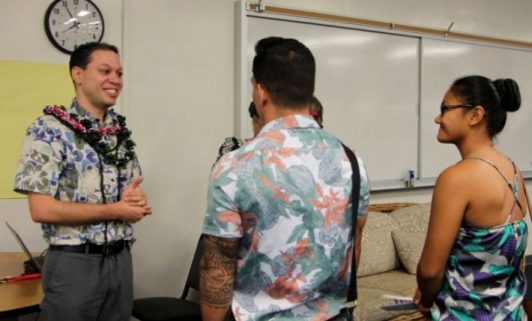

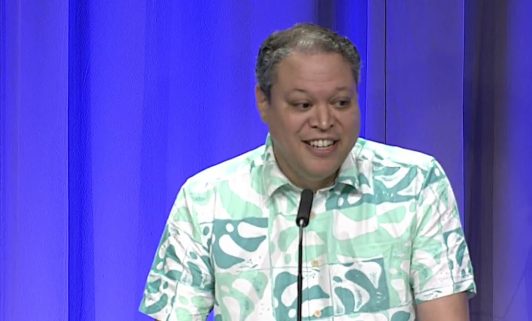

Professor, Department of Anatomy, Biochemistry and Physiology (ABP)
John A. Burns School of Medicine, University of Hawaiʻi at Mānoa

Full Member, Cancer Biology Program
University of Hawaiʻi Cancer Center
Contact Information:
Alika Maunakea, Ph.D.
Professor
Epigenomics Research Program
John A. Burns School of Medicine
University of Hawai’i, Manoa
Isabella Aiona Abbott Life Sciences Building
LSB-215 (office)/LSB-227 (lab)
1800 East-West Rd., Honolulu, HI 96822


(808)-956-9282
RESEARCH INTERESTS
Applying epigenomic information toward understanding the mechanistic relationships of gene-environment interactions that underlie the development of diseases of health disparities including cardiometabolic and neurodevelopmental conditions.
Using multi-omic approaches, identify novel biomarkers that appear early in disease progression to enable prevention.
Establishing community-academic partnerships for community-engaged biomedical research.
Initiating and maintaining blended, multidisciplinary community-based research with multi-omic biomedical approaches and health services/education that address health disparities.
GRADUATE FACULTY
Department of Molecular Biosciences and Bioengineering (MBBE)
Department of Public Health Studies (PHS)
Department of Developmental and Reproductive Biology (DRB)
Department of Department of Cell and Molecular Biology (CMB)
Neuroscience Specialization Program
Kanaka Maoli Institute (KMI), Hawaiʻinuiākea School of Hawaiian Knowledge
ACTIVE GRANTS
NIH/National Institute on Minority Health and Health Disparities, R61MD019793: The Maui Wildfire Exposure Cohort Study on Community Health and Resilience, Multiple Principal Investigator
$1,000,000
07/2024 – 06/2026
NIH/National Heart, Lung, and Blood Institute, UG03HL169657: Pacific Ocean Native Observational (PONO) Health Legacy Study, Multiple Principal Investigator
$4,000,000
09/2022 – 08/2029
NIH/National Institute on Minority Health and Health Disparities, R01MD016593: Socioecological Determinants of Immunoepigenetic Signatures of Diabetes Risk in Indigenous Communities, Principal Investigator
$3,300,000
07/2021 – 06/2026
NIH/National Institute of General Medical Sciences, P20GM139753: Integrative Center for Precision Nutrition and Human Health [PI: Berry], Co-investigator
$11,050,000
03/2022 – 03/2027
NIH/National Cancer Institute, P20CA275734: Hawaii Minority Health and Cancer Disparities SPORE [MPI: Le Marchand; Berenberg], Co-investigator
$12,000,000
09/2023 – 06/2028
DHHS/Office of Minority Health MP-CPI-23-002: Establishment of a Center for Indigenous Innovation and Health Equity (CIIHE) [PI: Enos], Co-investigator
$2,000,000
09/2023 – 09/2024
NIH/National Human Genome Research Institute, U54HG013243: Pacific Center for Genome Research [MPI: Lang; Deng], Co-investigator
$11,000,000
08/2023 – 07/2028
DEGREES
PhD, Biomedical Sciences
University of California, San Francisco
Postdoctoral Researcher
NIH, National Heart, Lung and Blood Institute (NHLBI), Laboratory of Molecular Immunology
HONORS AND AWARDS
2024
Kaʻōnohi Award for improving health/well-being of Native Hawaiians, Papa Ola Lōkahi
2022
Chan Zuckerberg Initiative (CZI) Science Diversity Leadership Award, Honorable Mention Recipient (19 out of 406 applicants; 4.6%)
2019
University of Hawaiʻi, Mānoa, nominee for the Blavatnik National Awards in Life Sciences
2017
Keystone Symposia Early Career Investigator Travel Award, Diversity in Life Sciences Program, Epigenetics & Human Disease: Progress from Mechanisms to Therapeutics
2014
Keystone Symposia Early Career Investigator Travel Award, Diversity in Life Sciences Program, Neuroepigenetics
2014 – 2018
NHLBI-K01 Mentored Career Development Award to Promote Faculty Diversity in Biomedical Research
2012 – 2014
The Queen’s Medical Center Fellow, Honolulu, Hawaiʻi
2005 – 2008
National Research Service Award (NIH, F-31 fellowship)